
Mankato-based Easy Environmental Solutions scales EasyFEN™ modular waste-to-agriculture technology, achieves positive operating cash flow, and advances its first system for Africa
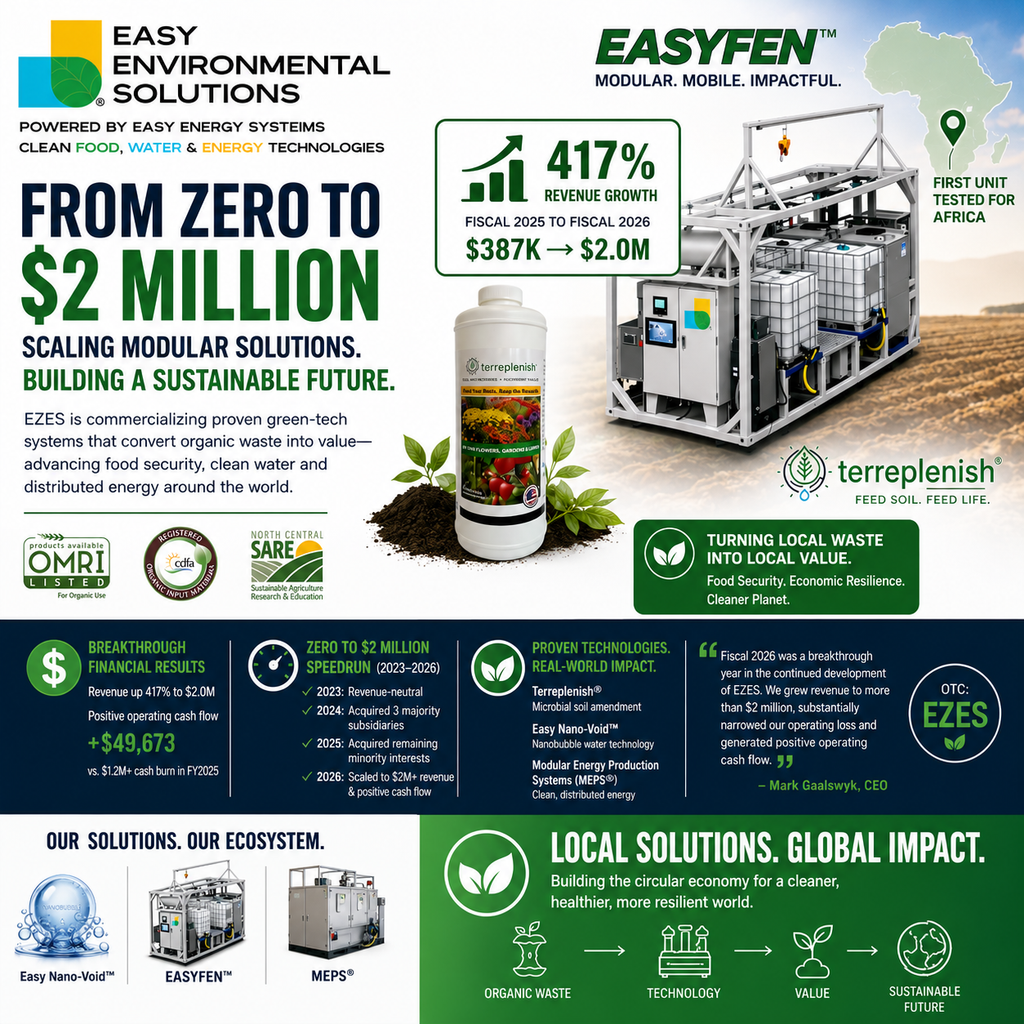
Revenue jumped 417% to $2.0 million in fiscal 2026.
Operating cash flow improved from a $1.2M+ outflow to $49,673 positive.
EasyFEN™ targets decentralized waste processing and agricultural production, with Africa representing an early international deployment market.
New York, September 2., 2026 – – PRISM MediaWire (Press Release Service – Press Release Distribution) – Global environmental crises—from mounting organic waste to the erosion of food security—demand more than just theoretical innovation; they require industrial-scale velocity. The challenge has always been the “valley of death” between R&D and commercial viability. Mankato-based Easy Environmental Solutions (OTC: EZES) (“EZES”) is currently rewriting that narrative, emerging as a high-velocity case study in how to rapidly commercialize green-tech systems for a parched global market.
The 417% Revenue Explosion
In its fiscal 2026 annual report, EZES reported a staggering 417% surge in revenue, rocketing from $387,605 in fiscal 2025 to $2,004,182 for the year ending May 31, 2026. This isn’t merely incremental progress; it is a fundamental market signal. In the volatile environmental tech sector, such a jump suggests the company has successfully pivoted from the laboratory to the loading dock, placing finished products into the hands of international customers.
“Fiscal 2026 was a breakthrough year in the continued development of Easy Environmental Solutions. We grew revenue to more than $2 million, substantially narrowed our operating loss and generated positive operating cash flow,” said Mark Gaalswyk, Chief Executive Officer of Easy Environmental Solutions.
The “Zero to $2 Million” Speedrun (2023–2026)
The EZES growth trajectory represents a compressed “company-building” masterclass. In fiscal 2023, the firm was effectively revenue-neutral with no operating subsidiaries. The transition was fueled by aggressive consolidation: in 2024, EZES acquired majority interests in three operating companies to build its portfolio. By 2025, it strategically swallowed the remaining minority interests in two of those subsidiaries.
This was not a slow-burn organic R&D play. By acquiring existing tech and then applying an intensive commercialization framework, EZES bypassed years of traditional development cycles. This strategic “speedrun” allowed the company to scale its consolidated technology platforms at a pace rarely seen in industrial environmental tech.
Modular Sustainability for Africa: A Visual Analysis of EasyFEN™
The crown jewel of this expansion is the EasyFEN™ system, a modular production unit designed to convert local organic waste into biologically based agricultural inputs. Following the 2026 fiscal year-end, the company successfully completed testing on its first unit destined for Africa.
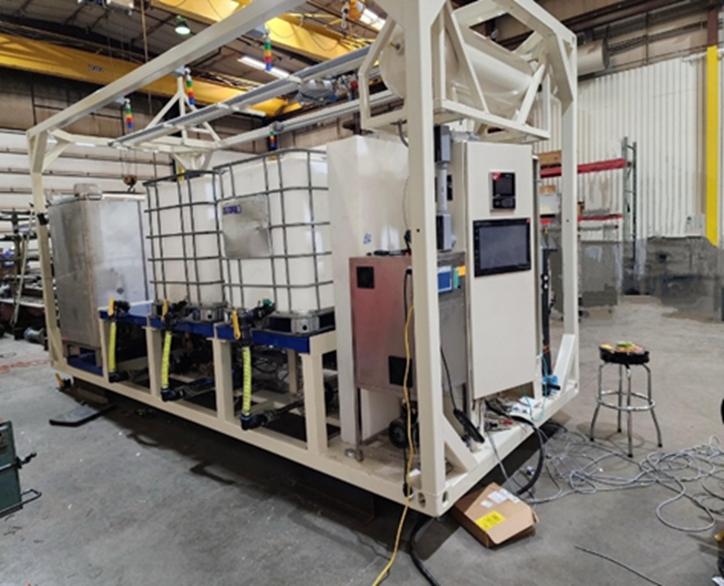
A visual inspection of the EasyFEN™ architecture reveals a design prioritized for rugged, international deployment. The system is housed within a heavy-duty steel skeletal frame, providing the structural integrity necessary for shipping and operation in remote environments. It features an integrated, high-tech control panel for localized management, but the real masterstroke is its use of standardized IBC (Intermediate Bulk Container) totes. By utilizing these universally recognizable containers within a plug-and-play framework, EZES has solved the logistics hurdles of traditional centralized waste processing. This modularity allows for a localized circular economy, processing waste exactly where it is generated to bolster regional food security.
Crossing the “Positive Cash Flow” Rubicon
While top-line revenue often grabs headlines, the true victory in the 2026 filing is the shift in operating cash flow. In fiscal 2025, the company burned through over $1.2 million in operating activities. Just twelve months later, EZES crossed the Rubicon, reporting positive operating cash flow of $49,673.
For any tech startup, this milestone is the ultimate proof of concept. It demonstrates a path toward self-sustainability, proving that the business model can now begin to support its own daily operations. This shift from a “burn” to a “build” phase is the most critical hurdle for long-term viability in the green-tech space.
The “Going Concern” and the Founder’s Bet
Despite these financial victories, the company’s disclosures maintain a “going concern” status, highlighting the high-stakes “human element” of the business. EZES remains dependent on the continued financial backing and persistence of CEO and Founder Mark Gaalswyk, alongside other key investors, to bridge the gap toward total independence.
This creates a fascinating tension: while the company has achieved the rare feat of positive operating cash flow, it still relies on a visionary leader’s commitment to reach its next stage of growth. It is a reminder that even the most advanced modular systems often depend on the singular persistence of a founder to navigate the final miles of global commercialization.
The Future Outlook
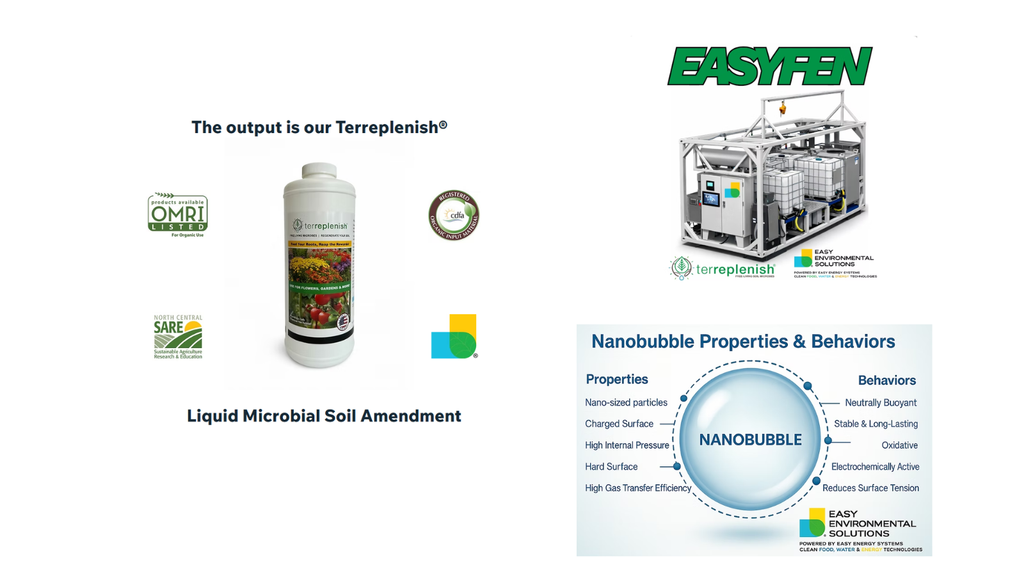
The EZES portfolio is expanding into a comprehensive circular economy ecosystem, featuring Terreplenish®, Easy Nano-Void™, and Modular Energy Production Systems (MEPS®). These platforms are designed to address the intersection of water quality, distributed energy, and regenerative agriculture.
“The completion of testing and demonstration of our first EasyFEN system intended for an African customer provides another encouraging example of that progress. We believe the accomplishments reflected in this filing provide a stronger foundation for the next stage of the Company’s growth.”
As EZES begins shipping its modular units to the corners of the globe, it raises a provocative question for the industry at large: Can localized, decentralized technology finally solve the global waste and food security crises where centralized, massive-scale infrastructure has failed?